
Diet and Exercise Recommendations
I won’t go on a soapbox about how western culture, ads, affordability and access to fresh produce, etc. put us at a disadvantage. But you are amazing and you want to make some healthier choices. My advice, and the advice of many physicians, is whatever you choose to do, do it incrementally and make sure it is something you can stick to for the long run. People have made drastic changes like the popular ketogenic diet, but if that only lasts a couple of months or even a year or two, whatever benefits you gained will be lost once you stop, and it may discourage you from making smaller changes.
Diet
One diet that has consistently been shown to improve health measures is the mediterranean diet. However, I’m not convinced people knows what that actually means. Take a look at this chart (pay attention to frequency for each food group).
I sure didn’t know it was this restrictive until I finally looked it up. It looks like the reverse of my diet in my 20s!
I like to think of this as a general guide to what we should eat more of and what we should try to limit.
Things I want to emphasize:
More fiber! Whole grains, vegetables, fruits have lots of fiber that’s good for your GI system and the good bacteria living in your colon. A diet high in fiber and whole foods have been shown to alter the gut microbiome which can have all sorts of good downstream effects. Fiber also helps improve blood pressure, diabetes/pre-diabetes, and cholesterol.
More whole foods and less processed foods. Replace apple juice/orange juice with whole apples and oranges. Replace crackers/chips/junk foods with roasted nuts, hummus, snacking vegetables, etc.
More fermented foods. Kimchi, sauerkraut, yogurt (with live cultures), kefir, kombucha. Whatever is your preference. Full of good bacteria/yeast “probiotics” that’s also augmenting the media (vegetables, dairy, sugars) into more beneficial micronutrients.
Side note: there’s more and more evidence on how important symbiosis of our body’s microbial flora is for our health. Preventing or improving C diff infections during antibiotic treatment, improving GI side-effects in patients on chemotherapy, vaginal estrogen reducing risk of recurrent UTIs in post-menopausal women by improving the local flora. Conversely, dysbiosis can lead to health issues. This is still a topic of ongoing research and isn’t written into stone. But I believe there is enough benefit without harms to recommend.
Less plastics – micro/nanoplastics has been a hot topic. Plastic of some form is certainly unavoidable. However, I believe there is now enough evidence about its harms that I certainly am mindful about avoiding certain things: single use plastics, bottled water, microwavable plastic, plastic food storage, nonstick cooking pans.
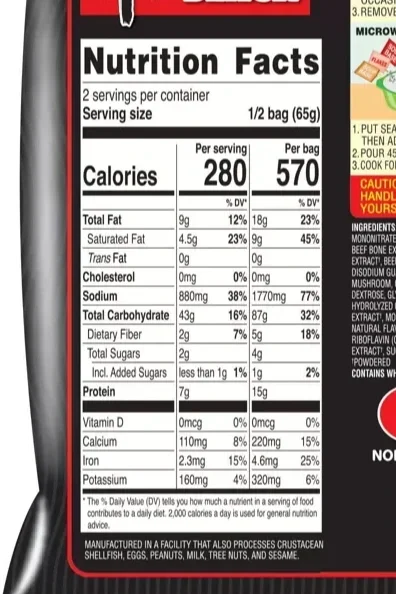
Pay attention to sodium content - this is less of a problem if you cook your own food a lot. However, if you get a lot of premade food, take a close look at the nutritional label and also serving size! This one pack of my favorite ramen noodle has 880 mg of sodium per serving. However, the serving size is listed as half a bag. Who eats half a bag of ramen?! Traditionally, it is recommended to eat less than 4,000mg of sodium per day, or 2,000mg if you have certain health conditions. However, now a lot of physician recommend reducing as much as you can without any strict cutoff.
Exercise
Modern lifestyle is often very sedentary, but any little bit of exercise helps. Taking a walk after a meal. Parking a little further at your destination. Going up the stairs at work.
Both aerobic and strength/resistance training exercise is good for you. From a purely medical perspective, aerobic exercise is good for your cardiovascular system. From observational studies, the people who exercised more, lived longer. A period of “intense” exercise seems to be also beneficial (10 minutes of exercise that got you breathless or heart racing per session). General recommendation is 30-60 minutes of aerobic exercise, 5 times per week.
Strength training is important to maintain strong bones, especially in women, who is more prone to osteoporosis in menopause. It’s also important as you get older, because frailty is very bad. I think of it as building up your reserve so that if you do develop a health problem – such as a fall, infection, cancer needing chemotherapy, surgery, etc – you can recover well and get back to your baseline. If you’re frail, a health problem can be a slippery slope that you can’t recover from. General recommendation is at least 2 sessions of strength training per week.