
Point-of-care Ultrasound in Primary Care
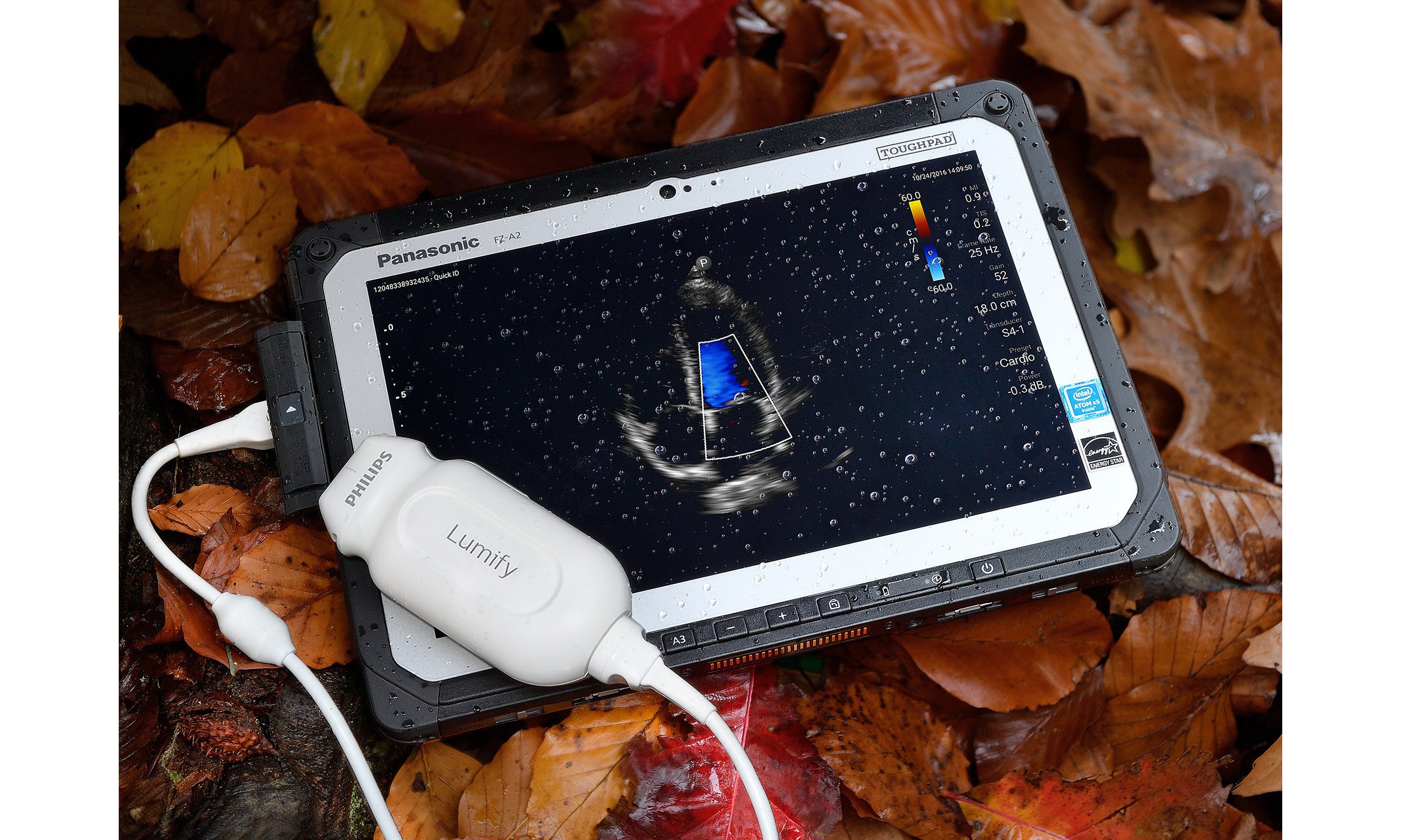
Philips Lumify, one of many pocketable ultrasound available
Point-of-care ultrasound (POCUS) is the use of portable ultrasound by clinicians at the bedside/office as opposed to sending patients to radiology for formal ultrasound studies. Think obstetricians doing fetal ultrasounds. POCUS has become popular in time sensitive settings such as emergency departments and ICU because it is quick and can change the management of a patient.
POCUS can also be used in the office setting for many different applications – screening for abdominal aortic aneurysms, gallstone disease, assessing for pneumonia, signs and management of heart failure, abscess related to cellulitis/skin infections, etc. However, POCUS has not been widely adopted in the traditional primary care setting, despite pocketable devices being available for 10+ years. I believe there are several reasons for this. It takes some training to get comfortable with a new skill (although studies have shown good accuracy even after a couple of hours in emergency medicine studies). It takes a bit of capital investment to purchase the equipment. But ultimately, it takes time to add a POCUS exam into a busy schedule of a traditional primary care practice, and the lack/difficulty of insurance billing for POCUS doesn’t justify the time commitment.
However, in a Direct Primary Care/Concierge practice setting, POCUS makes perfect sense. We have more time to invest in individual patient care and POCUS adds diagnostic accuracy compared to physical exam alone. Some would argue that POCUS is highly user dependent compared to formal ultrasound studies, but taking a history and physical exam is also highly user dependent. While POCUS does not replace formal ultrasounds, I believe POCUS brings one more useful bedside tool to help with diagnosis, screening, and patient education.
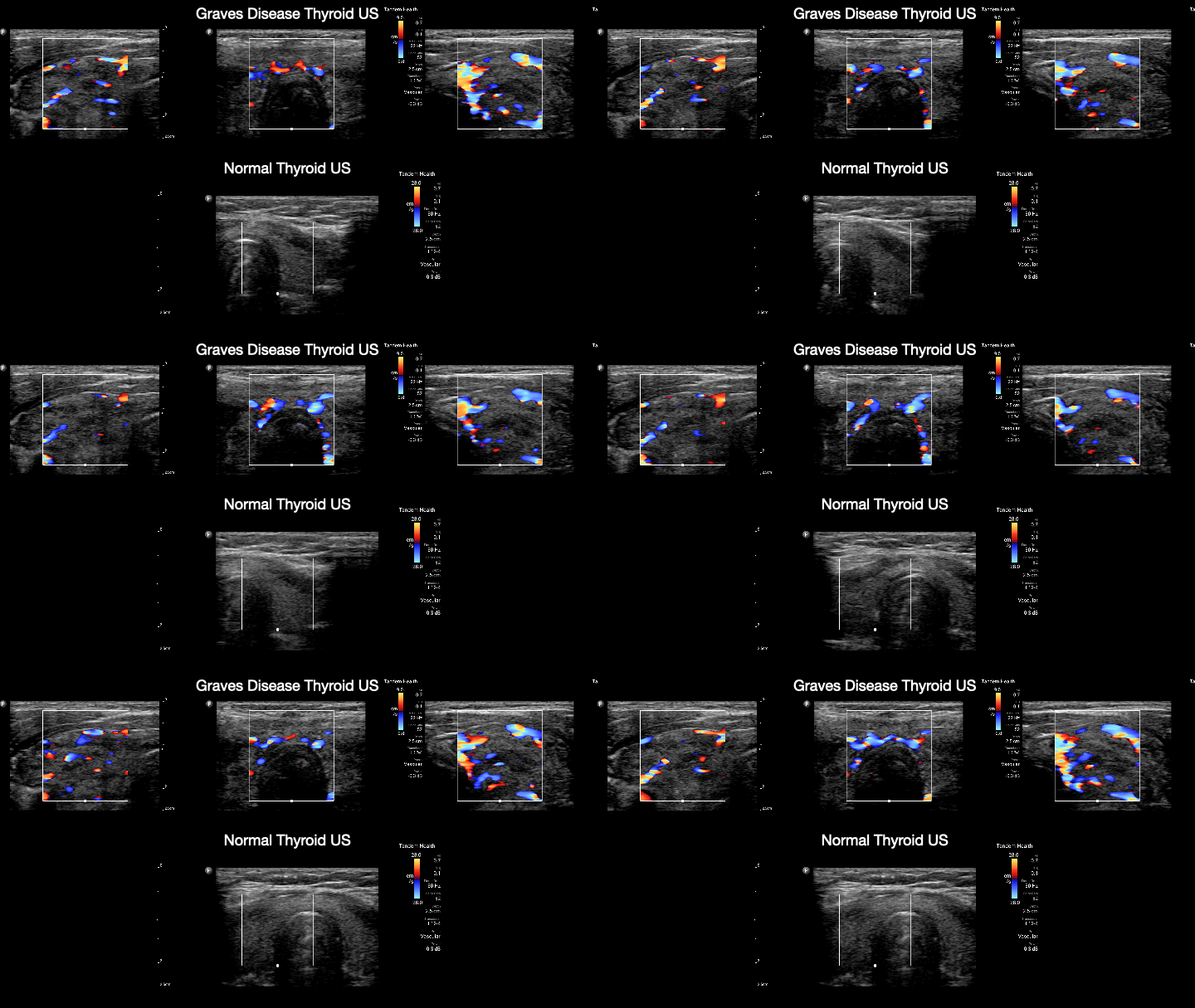
Above is an ultrasound of a patient with Graves Disease (hyperthyroidism) I performed, compared to a normal thyroid. The thyroid is visibly enlarged and hyper-vascular (red-blue color shows increased blood flow in the box). This is compared the the normal thyroid, where no color flow is seen. This helped educate the patient on what is happening in their disease and the importance of getting their thyroid function back to normal.